Nicaragua Solidarity Campaign Action Group


24 November 2025
US threatens Nicaragua with economic warfare in the form of 100% tariffs
As the US southern command moves its massive armada towards the coast of Venezuela, the US threatens Nicaragua with economic warfare by imposing 100% tariffs. Becca Renk Foster, a member of the Nicaragua Solidarity Coalition, reports from Managua.
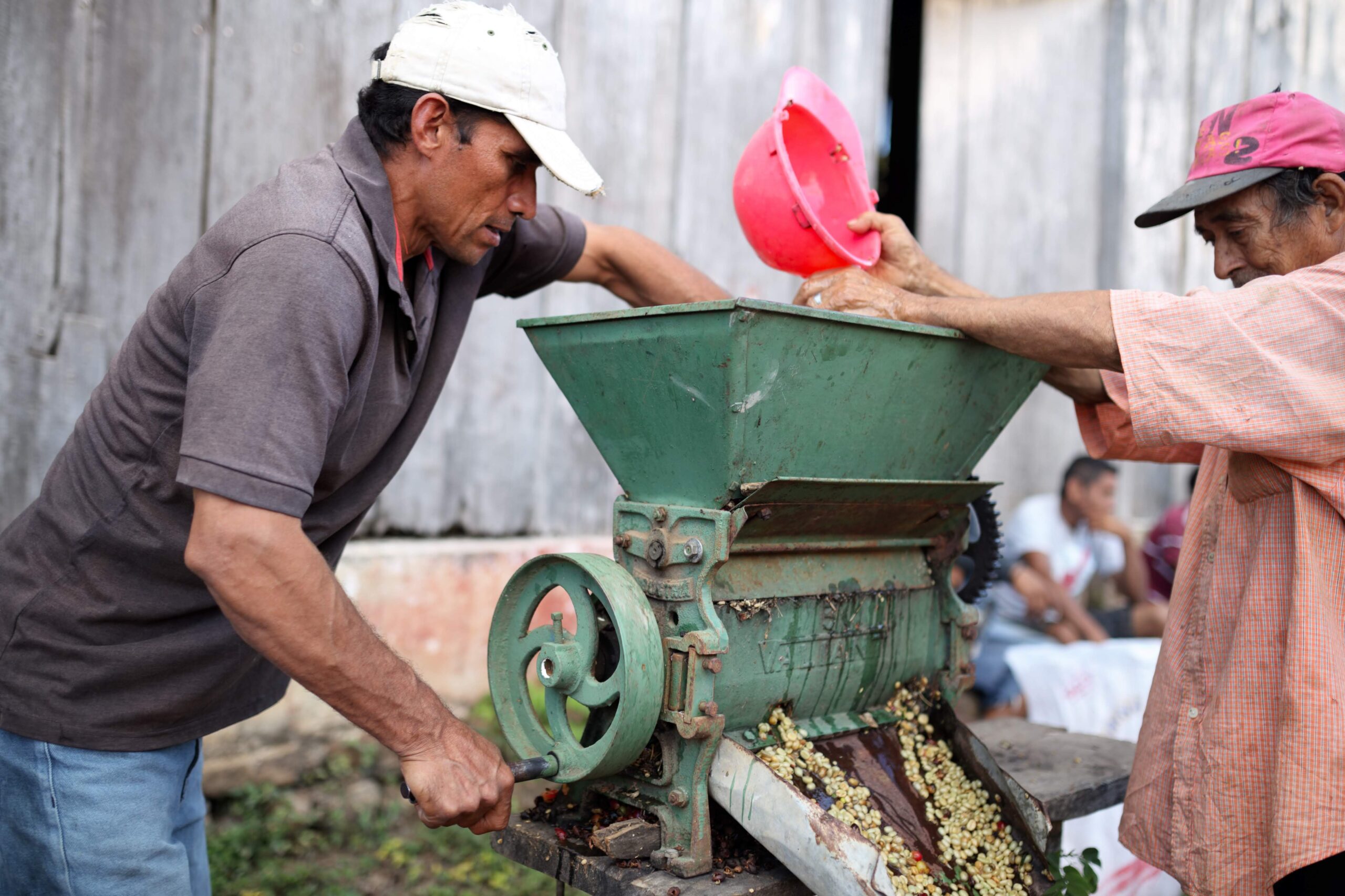
“We were already struggling with 18% tariffs this year, I don’t know how we could export our coffee under 100% tariffs,” René Gaitan, the vice president of a 51-family co-op, tells me as we watch the clouds clear out over a breath taking expanse of Nicaraguan landscape. The view from the El Porvenir worker- owned coffee cooperative stretches from Lake Managua north toward the Honduran border, dominated by the smoking crater of the Telica volcano.
The co-op is remote; an eight kilometer walk followed by a three hour bus journey to the city of Leon. But the news on 20 October 2025 that the US is threatening to impose 100% tariffs on the Central American nation reached the co-op with the lightning speed of the internet on Gaitan’s smart phone, charged by solar panels.
Trump administration politics of vengeance
A US Trade Representative’s office (USTR) report alleges that Nicaragua abuses labour rights and denies freedom of expression as a pretext to propose punitive measures, including 100% tariffs on imports and suspension of all Nicaragua’s benefits of the Dominican Republic–Central America Free Trade Agreement with the US (CAFTA-DR).
Most allegations have been cut and pasted from reports by the US State Department and US Department of Labor, which do not cite their sources, or come from paid journalist mouthpieces.
The USTR fails to produce evidence of the Nicaraguan government’s complacency in child or forced labour, describes migrants traveling through the country as “human trafficking,” and conflates industry trade associations with trade unions when describing “union arrests.” In the latter case, those arrested were two business owners convicted of acts of treason, including requesting military interventions and planning terrorist acts with financing from foreign powers.
Nicaragua’s commitment to employment rights
Publicly available reports published by the Nicaragua Ministry of Labor (MITRAB) clearly show a track record of improvements in labour rights since the Sandinista government returned to power in 2007.
According to MITRAB, between January 2007 and December 2023, Nicaragua increased child labour inspections by 4,600%, and 70,452 companies signed commitments to use no child labor and to respect the rights of adolescent workers.
During that same period, 1,636 new trade unions were formed, making the total number of workers now affiliated in unions 1.2 million, or 38% of Nicaragua’s total labour force. There was a 300% increase in workplace labour inspections and 138,374 women who were working for less than minimum wage had their salaries raised to the minimum.
The government accompanied workers in filing successful claims against their employers that resulted in US$8.8 million in claims for workers. There have been 3,010 sessions of tripartite labour negotiations among government, businesses and trade unions, and the minimum wage has increased 550% over 17 years, an illustration of Nicaragua’s commitment to collective bargaining.
So why is the US grasping at straws by falsely claiming Nicaragua violates labour laws?
To date, US sanctions (illegal economic coercive measures) against Nicaragua have been more limited than against Cuba and Venezuela. In part, this is because Nicaragua’s membership of CAFTA-DR.
As the US ramps up its attacks against Venezuela, and Cuba, it is determined to further pressure Nicaragua and isolate it from its neighbouring countries ignoring the CAFTA-DR agreement and siding stepping its lengthy processes.
How have small scale farmers benefitted from CAFTA-DR?
The USTR threats have Nicaraguan cooperatives like El Porvenir worried. Coffee, one of Nicaragua’s largest exports, supports 52,000 families and provides 500,000 jobs. Under CAFTA-DR, even small producers have been able to export their products – including coffee, dairy, meat and beans – duty-free to the US.
Although the 20-year-old CAFTA-DR was intended to benefit large scale businesses, the National Assembly approved complementary legislation to enable small producers and co-ops access to benefits, such as negotiating direct relations with US companies. These negotiations include a credit component to invest in adding value to their products. By purchasing machinery to process and package their own product, farmers and co-ops can cut out intermediaries, leaving more profits for producers.
Government trickle up development programmes reduce poverty
The efforts of the Sandinista government, combined with the benefits of CAFTA-DR, have turned around small-scale production central to the government’s national development plan with its focus on poverty reduction. “Trickle-up” programmes strengthen rural and creative economies with micro and small businesses and co-ops.
Over 18 years, the country has worked to improve stability, quality and profit margins for those at the bottom of the production chain, including training for 95,000 workers in value added products, building 800 new centres of crop collection and processing for coffee and cacao, and financing 19 agro-industrial processing centres.
Support for Nicaragua from US Textile organisations
Ironically, one of Nicaragua’s biggest allies is the US-based National Council of Textile Organizations who warn that Nicaragua forms part of a US$1.1 billion supply chain: garments assembled in Nicaragua use components from other CAFTA-DR countries with goods travelling up and down the isthmus to make apparel for the US. market. It warned that “destabilizing the US -CAFTA-DR production platform would have serious implications for US and regional workers, migration, economic development, and pending and future investment.”
Over the past 18 years, Nicaragua has diversified markets, and as a result, the country is not longer solely dependent on the US. For example, Panama has surpassed the US as the leading investor in the country, and Nicaragua’s free trade agreement with China resulted in a 218.3 % increase in exports in its first year,2024.
While René Gaitan and I are discussing strategies for selling El Porvenir coffee without being subject to 100% tariffs, 130 km away in Waswali, Matagalpa, Nicaraguan Co-Minister of Foreign Affairs Valdrack Jaentschke was speaking at ceremonies marking the opening of the coffee harvest. Jaentschke noted that this year, Nicaragua’s US$1.3 billion coffee harvest will be exported to 55 different countries. He also addressed the punitive trade measures threatened by the US:
‘The world has also been shaken by new – and old! – forms of imposition in international trade and politics,’ he said. ‘A new type of threat is emerging – or re-emerging, some would say – which respects nothing and no one in its eagerness to dismantle the international system that nations have been building over the last 80 years…
‘The Nicaraguan people, who have faced throughout our history all kinds of difficulties, invasions, climate impacts, and political threats, have always been able to face them successfully, trusting in our own strengths and in the unity of our people.’
In the midst of so much insecurity, one thing is certain: Nicaragua’s diplomacy, economic policies and unwavering focus on poverty reduction have created a national resilience that will allow the country to once again out manoeuvre US machinations.
This is an edited version of an article published 29 October in Sovereign Media entitled US scrambles to put pressure on Nicaragua