Nicaragua Solidarity Campaign Action Group


22 June 2026
Trade unionist Flavia Ocampo describes what it means to have her own home, part of a housing programme for those on low incomes
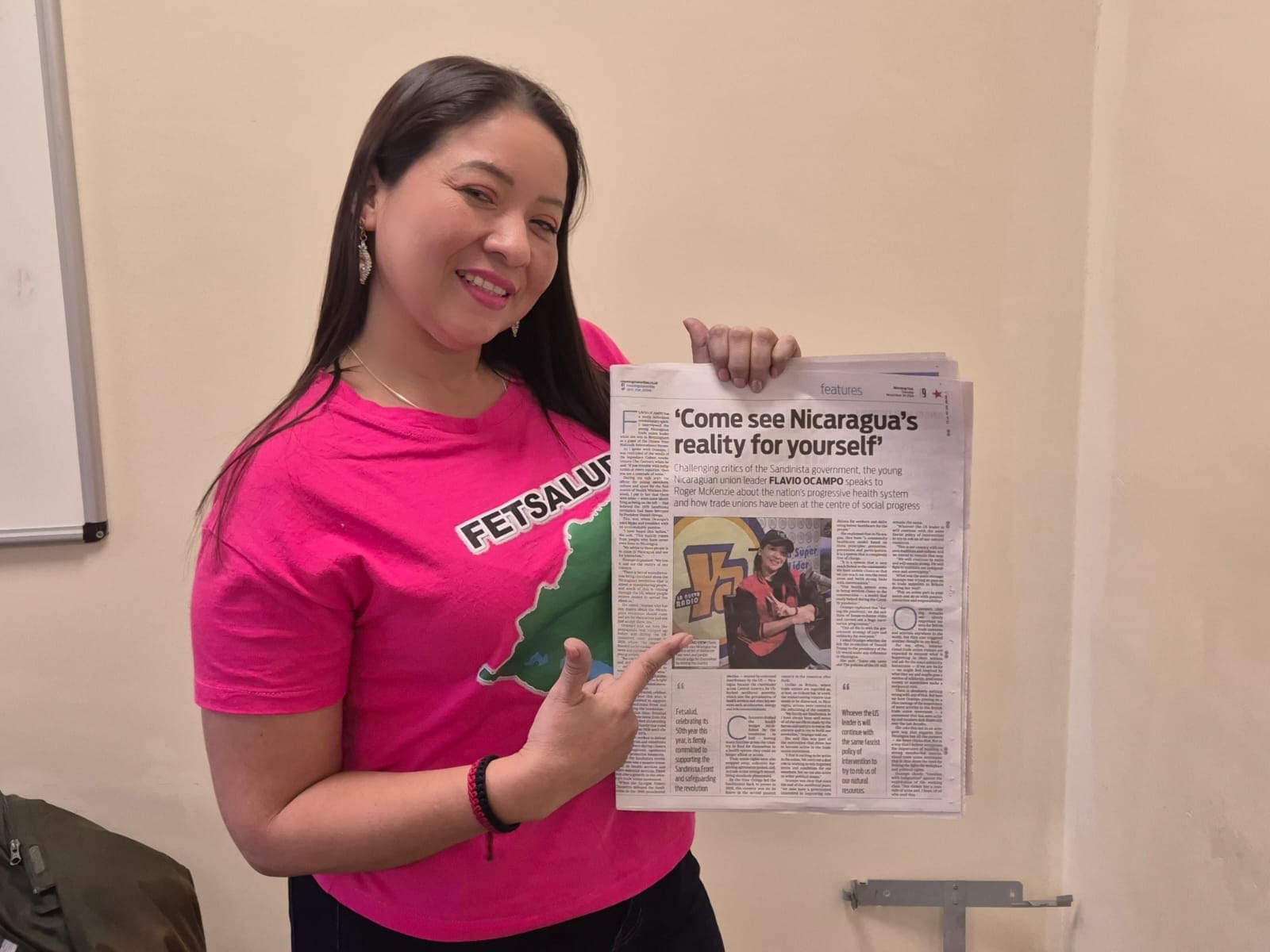
Flavia Ocampo (pictured above) is a pharmacist, a trade unionist and FSLN activist who lives in a suburb of Managua. The area is called Villa Jerusalén Bismarck Martinez in memory of a municipal worker kidnapped, tortured and killed in the 2018 failed coup. Since 2007 the government has built or repaired over 150,000 houses for sale to low income families as a part of a commitment to providing dignified housing.
Launched in 2019 with funding from the Chinese government, Villa Jerusalén Bismarck Martínez is much more than a housing project; it is a symbol of hope, dignity, and the restoration of rights of the 3,000 families whose lives have been transformed.
The Bismarck programme prioritises low income single mothers, and couples with children. The other requirements is that applicants must be able to demonstrate that have stable jobs and are able to meet repayments and other requirements.
On my block there are sixteen houses painted in cheerful colours and full of life. Each family, according to their financial circumstances, has been making improvements to their homes, showing the effort and care with which we build our future.
All the houses belong to hardworking, happy, and grateful families. Nearby there are small businesses run by the residents themselves: fast food sellers, corner shops, tortilla sellers, pharmacies, barbers, carpenters, appliance repair shops and hardware shops. These enterprises strengthen family bonds and the community economy.
Community organising that brings neighbours together is fundamental; we have WhatsApp groups where home owners share information, promote their businesses, and support community ventures. This creates a supportive network that binds families together. Villa Jerusalén Bismarck Martínez also has infrastructure designed for the well-being of families. This includes a primary school, a fire station, a health centre, a police station and a municipal building that deals with payments and other matters related to our homes.
Nearby we also have a beautiful park completely free, with football pitches, volleyball and basketball courts, playgrounds, exercise machines, flower gardens, and benches to meet with family and friends. Within the park, there is a small café to buy food and drinks, a space for cultural activities, water taps, and security guards to keep the area safe.
Another very important aspect of our suburb is a bus terminal bus with well maintained, subsidised transport services. These routes connect families with different parts of Managua, and facilitate access to the main markets, hospitals, study centres, and workplaces, thus allowing better mobility and quality of life for all inhabitants.
Before coming here, I first lived in Masaya with my parents and later rented a house with my partner in another neighbourhood of Managua. For a long time I thought I would never be able to have my own home: paying rent was investing money in something that would never be ours.
Although we dreamed of having our own home, we knew that accessing housing privately would be practically impossible due to high costs and other requirements.
When the opportunity came up to apply to the Bismarck Martínez programme I immediately submitted my documents with great hopes. Twelve months later, I received a call that would profoundly impact my life: I had been granted a home.
I could never have afforded private loans where instalments would have been between $US200 and $300 per month. Thanks to this social programme, after having made a down payment of $500 that my partner and I managed to scrape together, I pay only $47 dollars a month.
Today I can build a future with security, stability, and peace of mind. Knowing that every effort made is for our own home fills my heart with joy and hope. This achievement has profoundly impacted my life.
With much love, I have begun to personalise my home. I have already plastered and painted the house, and I am currently buying materials to install new flooring, a false ceiling, and turn it into an increasingly comfortable and beautiful space.
I have also decorated it with family photographs and paintings of Nicaraguan landscapes because I want my home to reflect our roots, our history, and our love for our country.
The Villa Jerusalén Bismarck Martinez suburb demonstrates the commitment of the Sandinista Government to working families and those who most need a dignified opportunity to move forward.
This project and others like it have changed my life and that of thousands of Nicaraguan families. As elsewhere it is not easy to obtain your own home in Nicaragua but here there is a political and human will that places families, their well-being, and their happiness at its core.
Today I can proudly say that I have my own home, a safe place to build my dreams and watch my family grow. Because in the end, the most valuable thing a human being has is family love, and having a dignified roof under which to share it is priceless.
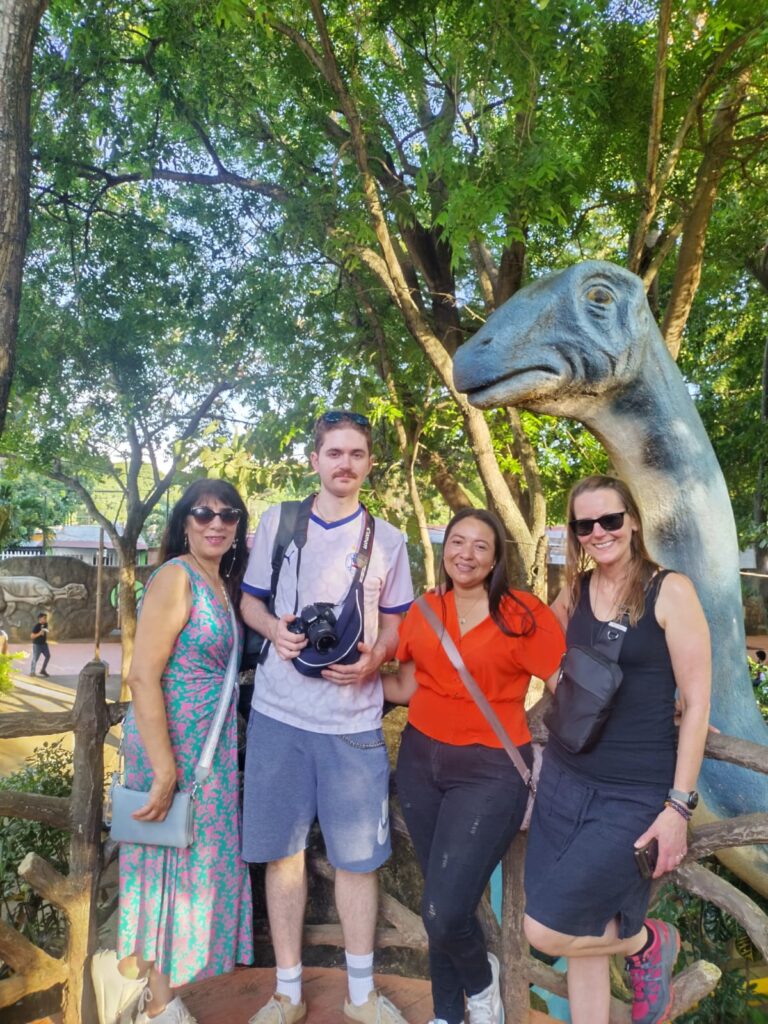
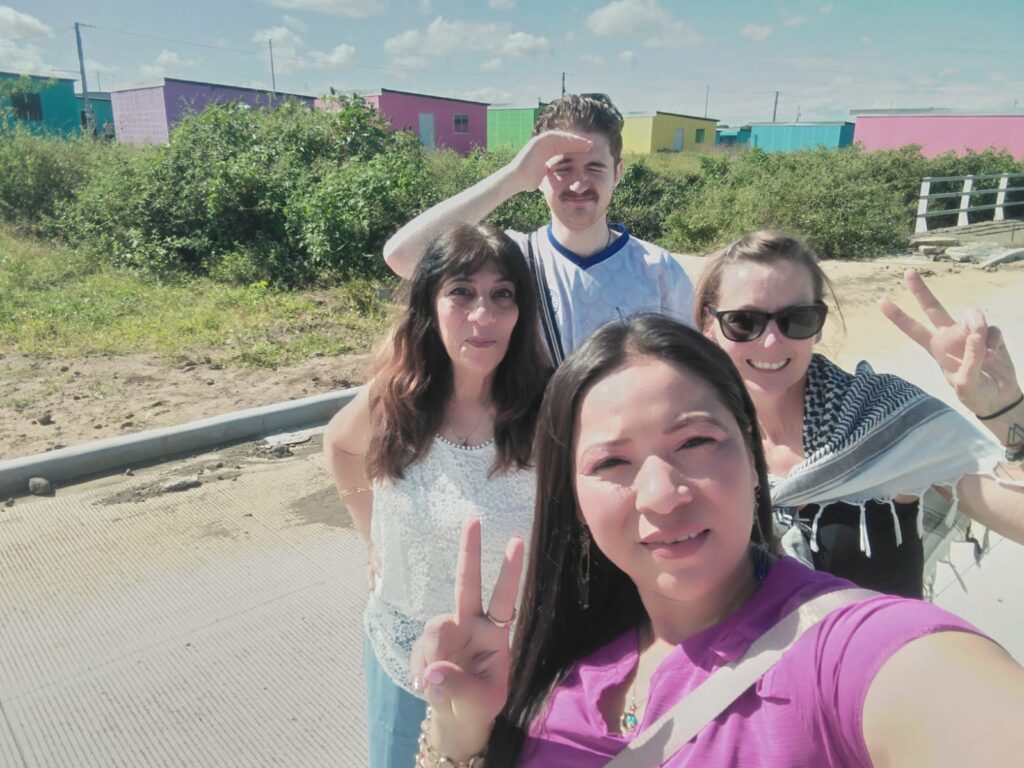
Flavia in Managua with members of a West Midlands Unison delegation in November 2025: Nadieh Alipourian, Sarah Gee and Edoardo Fusi.