Nicaragua Solidarity Campaign Action Group


6 September 2026
Nicaragua v Germany ICJ case on allegations that Germany is complicit in Israel’s genocide in Gaza, public hearing 7-10 Sept
Germany is responsible for 30% of Israel’s arms imports, the largest supplier of arms to Israel after the United States.
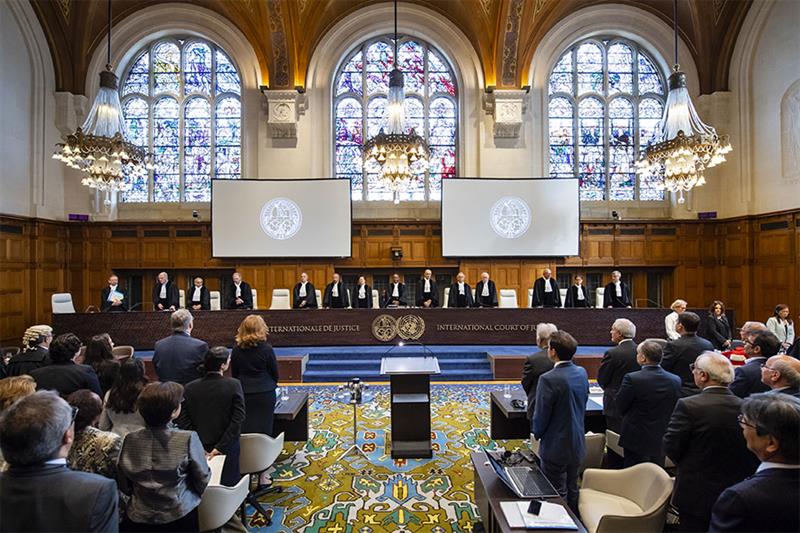
Against the backdrop of Israel’s renewed attacks on Gaza and settler atrocities on the West Bank, the ICJ is set to hold public hearings 7-10 September on the Nicaragua v Germany case.
The case, presented to the ICJ in March 2024, relates to allegations of German complicity in ‘violations of the Convention on the Prevention and Punishment of the Crime of Genocide’ and principles of international humanitarian law and other norms of general international law in relation to the Occupied Palestinian Territory, particularly the Gaza Strip.’
The hearing of 7-10 September will consider Germany’s ‘preliminary objections to the jurisdiction of the Court over the case and admissibility of certain claims contained in Nicaragua’s evidence.’
In January 2024 Germany announced its support for Israel in another ICJ case South Africa v Israel claiming that South Africa’s case under the Geneva Convention was ‘baseless.’
However, in March, 2026 the German Foreign Ministry announced withdrawal of support for Israel because it would compromise its own case.
Lessons from Nicaragua v United States of America ICJ verdict June 1986
During its arguments in this case against Germany, Nicaragua has drawn on its own experience of taking the most powerful nation in the world to the ICJ in 1986.
In the case, titled Military and Paramilitary Activities in and Against Nicaragua (Nicaragua v. United States of America), the ICJ upheld Nicaragua’s allegations that the United States had violated international law by financing and arming the “contras,” mining Nicaragua’s ports, and imposing coercive economic and political measures on the country.
This was a landmark case: Nicaragua, a small Central American country with a population of under four million in the 1980s, had won a case against the Goliath of the North.
However, the US then refused to accept the compulsory jurisdiction of the Court over the case or to pay Nicaragua claim for £12bn in reparations.
Carlos Arguello, Nicaragua’s representative to the ICJ explained the rationale behind the case “Publicly in Congress they were discussing how much money to give the contras, and there was no question of international law…So that is why we went to the World Court, because it wasn’t simply a matter of the most powerful nation doing whatever it wants, [we needed] to remind the world that international law exists.”
At an event marking the 40th Anniversary of the Nicaragua vs USA case, Augusto Zamora Rodríguez, former Nicaraguan Ambassador to Spain and professor of international law who worked on Nicaragua v. United States, explained that the case marked a turning point in international law.
“[It] left the United States stripped of legal arguments. And it stripped them bare forever, because what was said about Nicaragua in 1986 applies today to Iran; it applies today to countries under attack, such as so many in Africa and some in Latin America. And it also serves to remind governments that applaud these kinds of policies that they are absolutely illegal—not because someone says so voluntarily or out of conviction, but because the United Nations’ principal judicial body said so.”
Nicaragua- Palestine Solidarity
This ICJ case is another example of solidarity between Palestine and Nicaragua that goes back more than 100 years.
Most recently, the Nicaraguan government on 29 July, 2026 issued a solidarity statement condemning Israel’s renewed attacks, calling them an “unacceptable escalation of violence against the Palestinian people,” and denouncing “the continuous, growing violations of international and humanitarian law, and Israel’s attempts to criminalize the Palestinian population who seek only to protect their families, homes and livelihoods.”
With deaths of Palestinians reaching over 75,000, “Nicaragua’s people will continue to raise their voices in favour of the Palestinian cause and cry out for justice and peace, and for the freedom and dignity of the Palestinian people,” read Managua’s recent statement.
Edited version of an article entitled ‘Nicaragua raises its voice in another landmark case at the ICJ‘ by Becca Renk Foster who lives and works in sustainable community development in Nicaragua. She coordinates the work of Casa Benjamín Linder in Managua and is part of the Nicaragua Solidarity Coalition.