Nicaragua Solidarity Campaign Action Group



11 March 2026
Nicaragua, a top 25 country for renewable energy, with 70–80% green power
Our thanks to Explore Nicaragua | Relocation Consulting & Expat Forum for permission to post this article published on their website in February 2026.
Nicaragua ranks among the top 25 countries worldwide with roughly 70–80% of its power now generated from renewable sources.
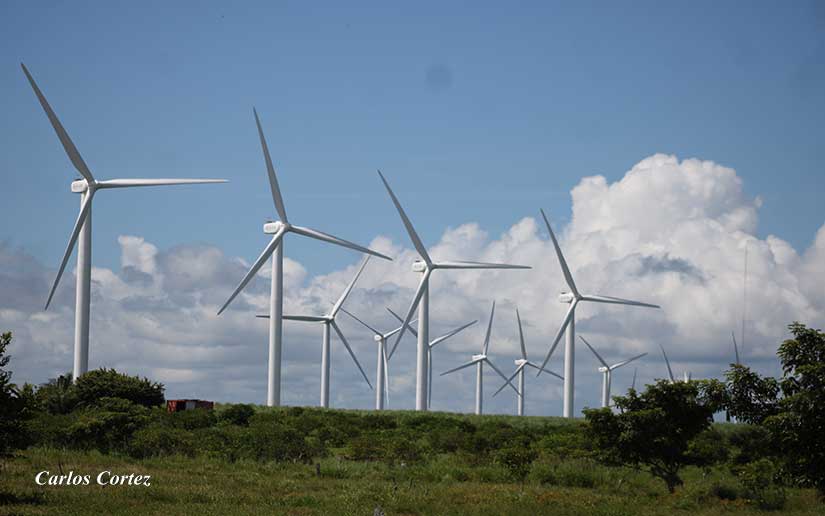
The first thing you notice when you drive over the border from Costa Rica are the towering turbines spinning steadily against the Pacific horizon, their blades cutting through the strong coastal winds in the Rivas region.
These iconic structures, part of the Amayo wind farm—one of Nicaragua’s pioneering renewable projects—are a striking welcome sign to a country that has undergone a remarkable transformation in its energy landscape.
Nicaragua, long reliant on imported fossil fuels for electricity, has aggressively shifted toward renewables over the past two decades. In the early 2000s, the nation depended heavily on oil-fired generation, but strategic policies, private investments, and abundant natural resources have driven a rapid increase in clean energy supply.
By 2025, the country had achieved impressive milestones, with renewable sources consistently powering a majority—and often exceeding 70-80%—of its electricity grid in recent years.
Key drivers of this growth include a diverse mix of technologies tailored to Nicaragua’s geography:
– Wind power stands out as one of the most significant contributors. Projects like Amayo (around 63 MW total capacity across phases) and others along the Pacific coast have harnessed consistent trade winds, making wind a top renewable source.
Wind has historically accounted for 10-14% or more of generation in various years, with installed capacity around 186 MW in recent profiles.
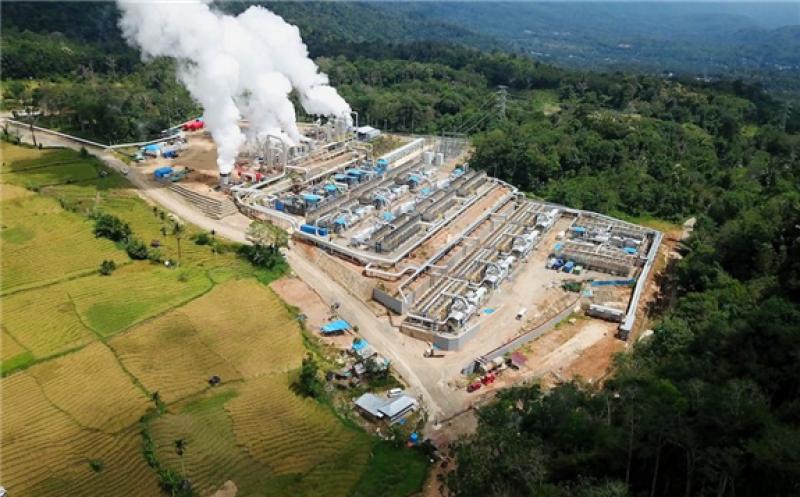
– Geothermal energy, drawing from the country’s position along the Pacific Ring of Fire, provides reliable baseload power. Fields like Momotombo and San Jacinto-Tizate deliver steady output, contributing roughly 10-16% of electricity in recent data, with significant untapped potential estimated at over 1,500 MW.
– Hydroelectric sources, including small and medium plants, leverage Nicaragua’s abundant rivers. While large-scale hydro has grown modestly, maintenance and smaller installations have helped hydro supply around 10-13% of demand, supporting rural electrification efforts.
– Biomass, primarily from sugarcane bagasse burned at mills, adds another substantial share, often 13-19%, capitalizing on agricultural waste.
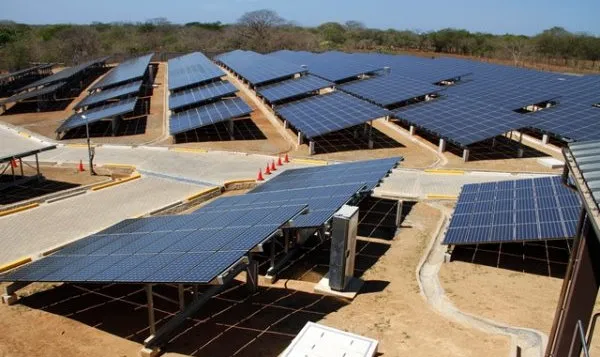
– Solar has seen accelerating growth, particularly in the last few years. With high solar irradiation (yielding around 2,300 kWh/kWp annually for utility-scale installations), projects like the recent 70 MW Enesolar-3 plant and others are expanding capacity rapidly. Solar’s share remains smaller but is poised for major increases, with plans to add hundreds of megawatts in the near term.
Recent reports highlight the momentum: In mid-2025, renewables accounted for about 73% of electricity generation, and by late 2025, the matrix exceeded 80% clean sources in some periods, thanks to hydroelectric maintenance and ongoing additions.
Installed renewable capacity has climbed toward or beyond 1,000 MW in targets set for 2025, up from around 887 MW in 2020. This progress aligns with Nicaragua’s updated climate commitments, aiming for even higher renewable shares by 2030, and has positioned the country as a leader in Central America’s energy transition.
The benefits extend beyond environmental gains. Greater reliance on domestic renewables has reduced vulnerability to global oil price fluctuations, lowered generation costs in many cases, and expanded electricity access to over 98% of the population from much lower levels two decades ago.
It has also supported rural development through off-grid solar and small hydro solutions. Looking ahead, Nicaragua continues to prioritize renewables, with ambitious plans for more solar, wind, and geothermal expansion, plus emerging interests in areas like green hydrogen and energy storage. As those border turbines keep turning, they symbolize not just a scenic entry point, but a nation powering its future with increasingly clean, sustainable energy.